
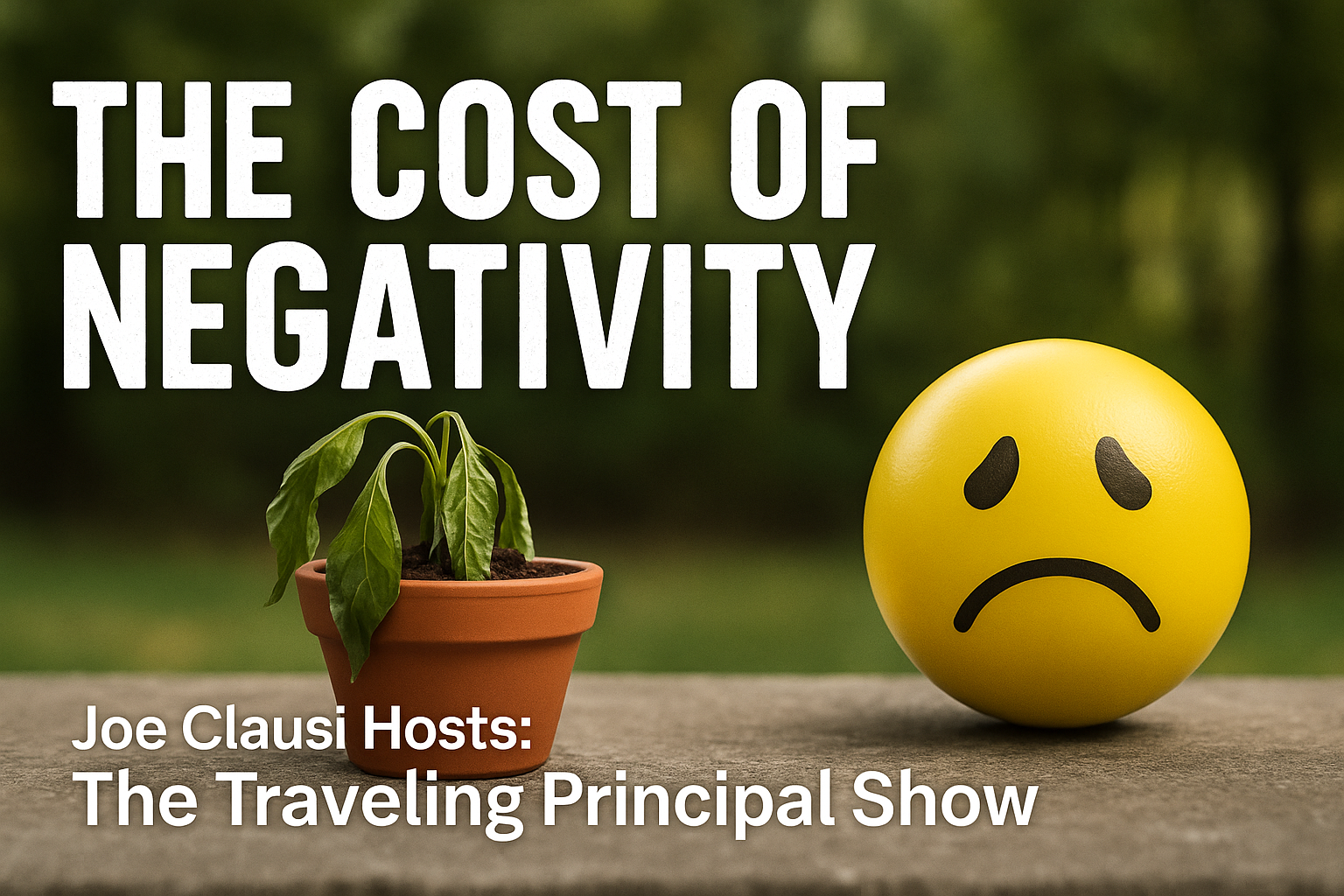

If negativity were a budget line item in schools, it would bankrupt us faster than Chromebooks on a rainy field trip.
And yet, here we are — paying the price every single day.
Negativity isn’t just bad energy or an annoying staff lounge hobby.
It’s a full-scale, professionally managed heist…and the only ones robbing the place are us.
Negativity spreads faster than a viral TikTok dance in a middle school cafeteria.
One sarcastic comment, one “we tried that already,” and suddenly — boom — the emotional budget for the week is gone.
And what does it cost us?
Student engagement tanks. (“Why should I try? Even my teacher hates this place.”)
Teacher creativity shrivels. (“New idea? Nah, they’ll shoot it down.”)
Leadership loses steam. (“What’s the point of another PD day?”)
Worse?
Negativity doesn’t just make people miserable — it makes growth impossible.
You can’t innovate inside a swamp of cynicism.
And you definitely can’t outwork a culture that’s already decided to quit.
We keep sending memos about curriculum pacing guides and cross-curricular initiatives…
Meanwhile, negativity is hosting a potluck in the staff room — and everyone’s invited.
The research is crystal clear:
When school climate turns negative, collaboration dries up, innovation stops, and teacher burnout explodes (Source).
Students feel it. Parents hear it. Districts eventually pay for it — in higher turnover, lower test scores, and community distrust.
Negativity isn’t free.
It’s the most expensive thing happening in schools today.
Here’s the harsh but freeing truth:
You can’t control all the drama.
You can control whether you build something better anyway.
In every school I’ve worked with, we started changing the climate one small win at a time:
Celebrate when a student masters something tiny but meaningful.
Shout out the teacher who tried a weird new project and totally bombed… but still dared.
Name the moments of progress louder than the failures.
Small wins are bricks.
Negativity is a bulldozer.
You decide what you pick up each day.
Negativity charges you every day, whether you agreed to it or not.
Hope, on the other hand, asks for a little patience, a little courage, and a willingness to look ridiculous for believing in better.
But you know what?
The future of education has always belonged to the ridiculous.
To the ones who dared to think a better school is possible — even when the staffroom grumblers said otherwise.
Choose wisely.
You’re investing either way.